Disclosure: OnlyVPNGuide.com may earn a commission if you purchase through links on this page, at no extra cost to you. This never affects our independent testing or opinions. Read our full Affiliate Disclosure.
Quick Answer: NordVPN is our best overall VPN for 2026 because it combines a broad server network, modern security tools, strong streaming support and beginner-friendly apps. Surfshark is the better value for unlimited devices, while Proton VPN and Mullvad stand out for privacy. Your best choice depends on budget, devices and use case.
A dependable VPN should protect your connection without turning everyday browsing into a technical project. It should also have stable apps, a sensible privacy policy, responsive support and enough nearby servers to avoid unnecessary slowdowns.
This best VPN 2026 guide compares ten established providers across privacy, security, speed potential, streaming, torrenting, apps, device limits, pricing structure and customer support. We do not invent laboratory results. Network performance changes by location, device, internet provider and time of day, so any live speed figures should be added only after repeatable testing on the final publication date.
Best VPN Services in 2026 at a Glance
| Rank | VPN | Best for | Simultaneous connections | Main strength | Important limitation |
| 1 | NordVPN | Best overall VPN | 10 | Balanced privacy, speed potential and streaming features | Renewal pricing can be higher than introductory pricing |
| 2 | Surfshark | Best value for many devices | Unlimited | Unlimited connections and broad feature set | Long-term plans usually offer the strongest value |
| 3 | ExpressVPN | Beginners and polished apps | Up to 14 | Simple apps, Lightway protocol and broad platform support | Often positioned at a premium price |
| 4 | Proton VPN | Privacy and a usable free option | Up to 10 on paid plans | Swiss-based privacy focus and Secure Core | Advanced features can cost more than basic rivals |
| 5 | CyberGhost | Streaming-focused beginners | 7 | Easy apps and task-oriented server categories | Advanced users may want more fine control |
| 6 | Private Internet Access | Customization and P2P users | Unlimited | Adjustable settings, WireGuard and OpenVPN | The number of settings may feel busy to beginners |
| 7 | IPVanish | Multi-device households | Unlimited | Broad app coverage and no connection cap | Verify current streaming performance before publishing |
| 8 | Mullvad | Minimal account data | 5 | Account-number signup and privacy-first design | Fewer entertainment-oriented extras |
| 9 | Windscribe | Flexible free and paid use | Unlimited personal devices | Free tier, anti-censorship options and R.O.B.E.R.T. | Free data and locations are limited |
| 10 | PureVPN | Broad platform coverage | 10 | Large network and optional advanced add-ons | Add-ons can complicate the final price |
Pricing note: Promotions, taxes, plan names and renewal rates change frequently.
How Did We Choose the Best VPN 2026 Rankings?
We ranked each service against the same practical criteria. A high position requires more than a large marketing number or a low introductory price.
- Security fundamentals: modern protocols, a reliable kill switch, leak protection and clear encryption practices.
- Privacy: understandable logging disclosures, ownership transparency, independent assurance where available and sensible account practices.
- Speed potential: modern protocols, nearby server choice, network capacity and consistent connection behavior. No unverified Mbps claims are used here.
- Streaming: apps for common viewing devices, location choice and provider support for streaming use. Access can change without notice.
- Apps and devices: usability on Windows, macOS, Android, iOS, Linux, browsers, TVs and routers, plus the simultaneous-connection limit.
- Support: accessible setup guides, troubleshooting resources, refund information and live help where offered.
- Value: the complete cost, including renewal rates and paid extras, rather than the headline monthly equivalent alone.
The word “tested” in this article should refer to a documented editorial checklist, not an unsupported claim. Before publishing, the editor should install every current app, run leak and kill-switch checks, record three speed-test rounds on nearby and long-distance servers, and verify streaming access on the services named in the article.
Which Is the Best Overall VPN in 2026?
1. NordVPN — Best Overall VPN
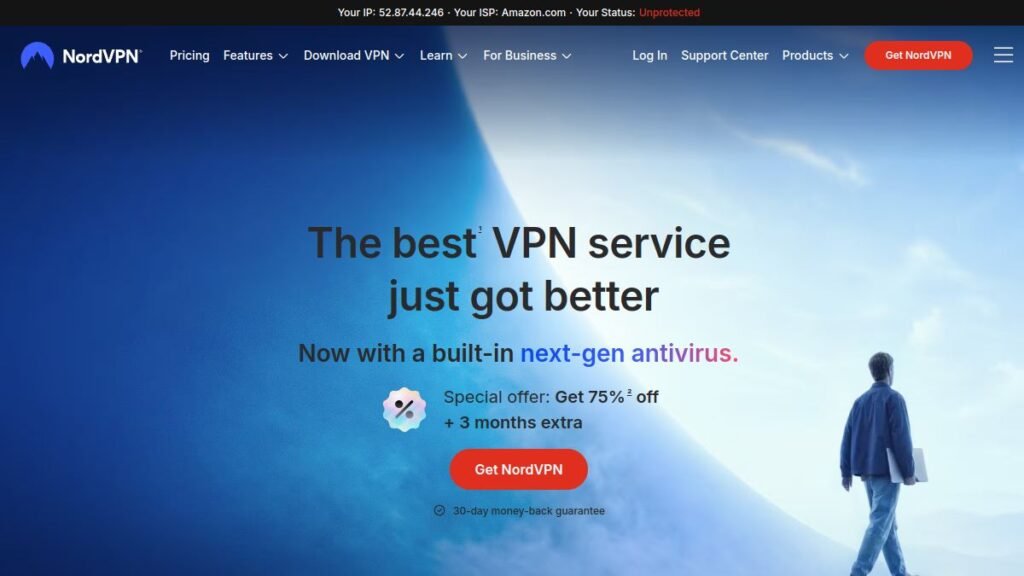
NordVPN takes the top position because it offers a strong balance for most readers. Its official network page lists thousands of servers across a wide geographic footprint, while its apps support NordLynx, OpenVPN and other platform-dependent connection options.
Security features include a kill switch, Double VPN, obfuscated servers and threat-blocking tools. NordLynx is NordVPN’s implementation built around WireGuard, a modern protocol designed to reduce connection overhead while retaining strong cryptography.
For streaming, NordVPN provides apps for major desktop, mobile and TV platforms. No VPN can promise permanent access to every streaming library, because platforms continually change their blocking systems. Still, NordVPN’s large location choice and device coverage make it a practical first option to test.
Plans are generally sold monthly and in discounted longer terms. Support includes setup documentation, email help and live chat.
Best for: readers who want one well-rounded service for privacy, travel, streaming and everyday protection.
Not ideal for: shoppers who only want the lowest possible upfront cost or who dislike multi-tier bundles.
2. Surfshark — Best VPN Service for Value
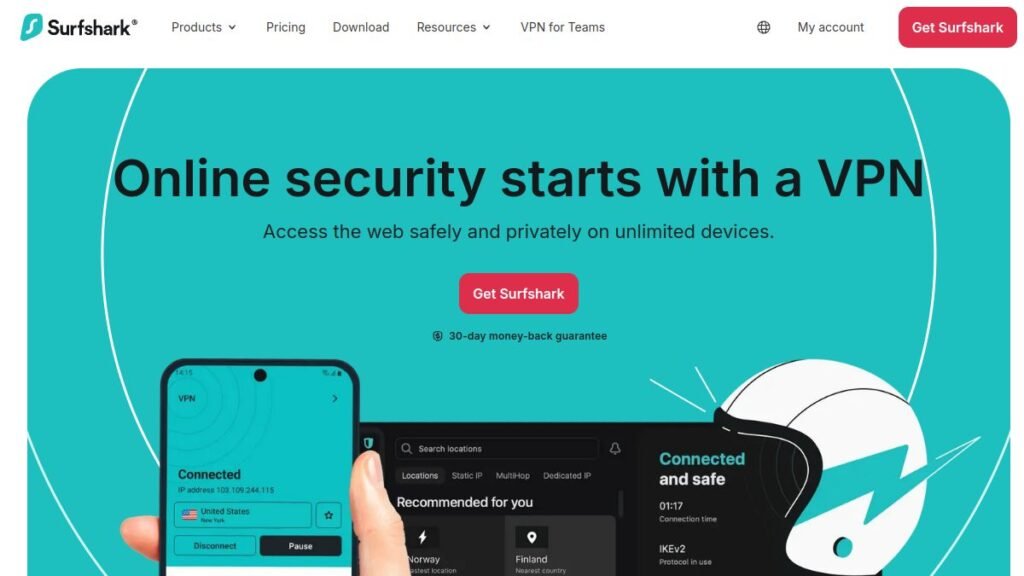
Surfshark is an attractive alternative for families and users with many devices because one subscription supports unlimited simultaneous connections. Its official materials list WireGuard, OpenVPN and IKEv2, although protocol availability can differ by operating system.
The service combines core VPN protection with features such as MultiHop, an ad and tracker blocker, obfuscation options and RAM-only infrastructure. Some identity, antivirus or data-removal tools belong to higher bundles, so compare the VPN-only plan with the full package before paying.
Surfshark’s unlimited-device policy is especially useful in a home with phones, laptops, tablets and smart TVs. Remember that account sharing must still follow the provider’s terms, and a router installation may require more technical work than a normal app.
Its headline price is usually strongest on a long commitment. Confirm the total paid today, renewal rate and included features.
Best for: large households, frequent device switchers and value-focused buyers.
Not ideal for: users who prefer a short commitment or need a simple one-plan price.
3. ExpressVPN — Best for Beginners and Simple Apps
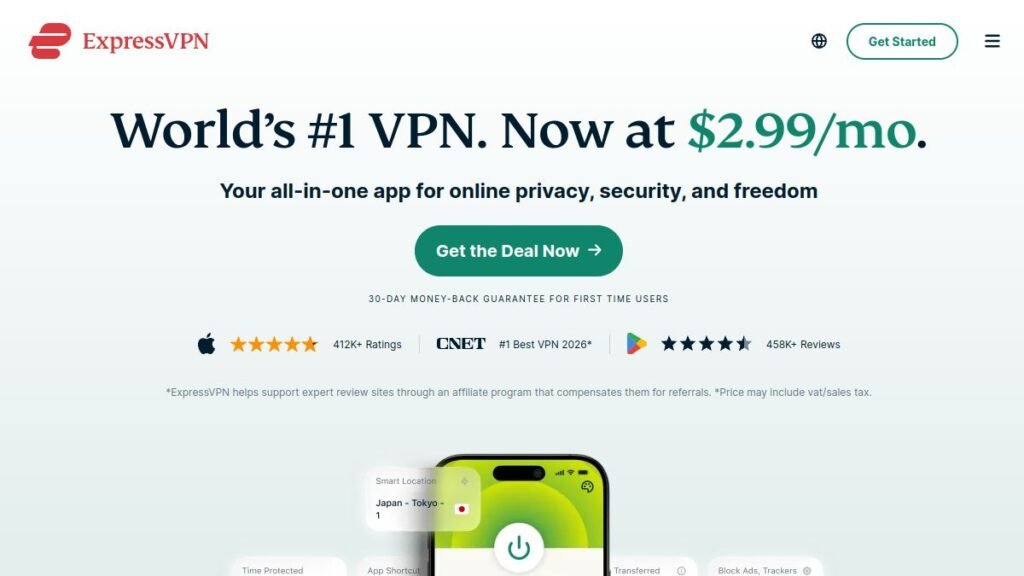
ExpressVPN focuses on a clean experience across computers, phones, browsers, TVs and routers. Its proprietary Lightway protocol is designed for quick connections and reliable switching between networks. Official support pages also list WireGuard and OpenVPN options on supported platforms.
The service uses TrustedServer technology, which runs server software on volatile memory rather than conventional hard drives. That architecture is not a substitute for reading the privacy policy, but it reduces reliance on persistent server storage.
ExpressVPN supports up to 14 simultaneous connections according to its current official device page. That is enough for many households, though Surfshark, PIA, IPVanish and Windscribe advertise unlimited connections.
The main drawback is value: ExpressVPN is commonly positioned above budget competitors. Verify the current plan, term and renewal conditions at checkout:
Best for: first-time VPN users, travelers and readers who value straightforward apps.
Not ideal for: buyers prioritizing the lowest cost or unlimited connections.
4. Proton VPN — Best VPN for Privacy and Free Use
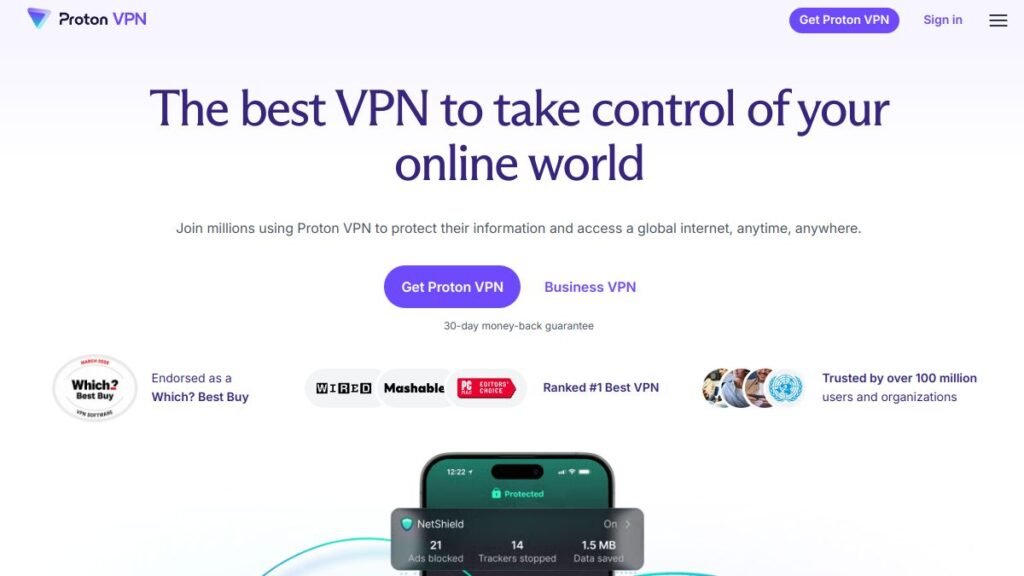
Proton VPN is operated from Switzerland and emphasizes privacy, open-source applications and transparent security practices. Its Secure Core feature can route traffic through an additional privacy-focused server before it reaches the final VPN location. This may improve protection against certain network-level threats, but the extra route can also reduce speed.
The paid service supports modern protocols and up to 10 devices. Proton also offers a free plan without the short trial clock used by many competitors. Free users receive fewer locations and features, so it is better for basic protection than for choosing a specific streaming region.
Proton’s apps cover major desktop and mobile platforms, and paid plans include features for streaming and P2P use. The broader Proton ecosystem may appeal to readers who also use encrypted email or cloud storage, but the bundle is not necessary if you only need a VPN.
Pricing: Check Current Price including whether the quoted rate is for VPN Plus or a wider Proton bundle.
Best for: privacy-focused users and beginners who need a reputable free starting point.
Not ideal for: free users who require a large country selection or guaranteed streaming access.
5. CyberGhost — Best for Streaming-Focused Beginners
CyberGhost uses an approachable interface and groups some servers by activity, including streaming and downloading. That organization can help beginners avoid guessing which location to try first.
Its supported protocols include WireGuard, OpenVPN and IKEv2, with availability varying by operating system. Smart Rules can automate actions such as connecting when a particular app opens or when the device joins an unfamiliar Wi-Fi network.
CyberGhost allows seven simultaneous device connections. This is sufficient for an individual or small household, but it is less flexible than unlimited-device services. Its long-term plans may include a longer refund window than monthly plans; verify the exact policy at checkout.
Do not publish a fixed server total until checking the live network page. Confirm streaming platforms through current testing because access changes often.
Pricing:
Best for: beginners who want labeled streaming options and simple automation.
Not ideal for: large households or experts who want highly granular networking controls.
6. Private Internet Access — Best for Customization and Torrenting
Private Internet Access, usually called PIA, gives users more control than many beginner-focused apps. It supports WireGuard and OpenVPN, adjustable encryption behavior, split tunneling on supported systems, a kill switch and PIA MACE for blocking selected ads, trackers and malicious domains.
PIA’s apps and core protocols are open source, allowing technical users to inspect the code. Its official network information says servers operate on RAM-only infrastructure and that subscriptions allow unlimited simultaneous connections.
For P2P users, the combination of broad location choice, port-forwarding availability in selected regions and configurable protocols is useful. Torrenting copyrighted material without permission can be unlawful. Check local laws, as VPN legality and permitted uses vary by country and can change.
The busy settings menu is both the benefit and the drawback. Beginners can use automatic settings, but they may find ExpressVPN or CyberGhost easier on day one.
Pricing:
Best for: advanced users, Linux users and people who want connection control.
Not ideal for: readers who want the simplest possible interface.
7. IPVanish — Best for Multi-Device Households
IPVanish is designed for users who want to protect many devices under one account. Its current plan advertises unlimited simultaneous connections, with apps for major desktop, mobile and streaming platforms.
WireGuard support gives it a modern default for everyday speed and security, while OpenVPN offers a widely supported fallback. Features vary across apps, so verify split tunneling, kill-switch behavior and protocol choice separately on Windows, macOS, Android, iOS and TV devices.
IPVanish can be a practical option for a household that does not want to count active devices. However, streaming results can change quickly, and the current server network should be checked directly before publication.
Network:
Pricing:
Best for: homes with many active devices and users who value unlimited connections.
Not ideal for: buyers who need independently confirmed access to a specific streaming library without testing it first.
8. Mullvad — Best for Minimal Account Data
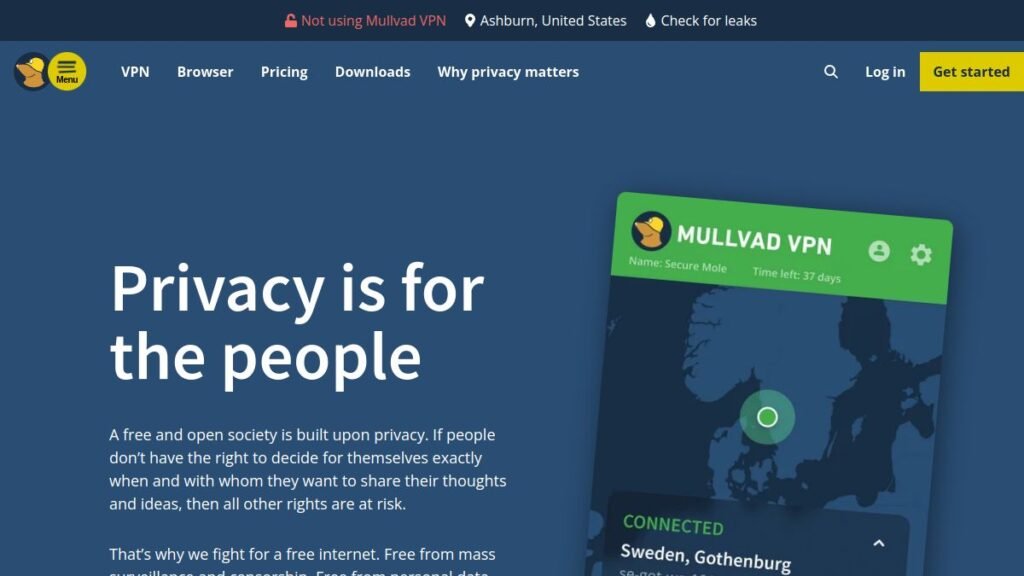
Mullvad takes a distinctive privacy-first approach. Instead of creating an account with an email address, users receive a numbered account. The provider also accepts several payment methods, including options that can reduce the personal data attached to a subscription.
Mullvad now centers its service on WireGuard. Its official documentation states that OpenVPN servers were removed in January 2026, so older comparisons that still list OpenVPN are outdated. The apps include a built-in firewall-style kill switch, leak protection and anti-censorship connection options.
One account supports five devices. Mullvad also uses a flat-price model rather than pushing a heavily discounted multi-year contract, although the exact currency conversion should be checked:
Mullvad does not focus as heavily on streaming marketing, dedicated IPs or large entertainment bundles. That restraint is appealing for privacy purists but less convenient for viewers who want specialized streaming support.
Best for: users who want minimal signup information and a focused privacy tool.
Not ideal for: streaming-first households or users who need more than five direct connections.
9. Windscribe — Best Flexible Free VPN

Windscribe offers both free and paid access, unlimited personal device connections and a useful set of connection methods. Official documentation lists WireGuard, OpenVPN, IKEv2, Stealth and WStunnel, giving users alternatives when a school, office or public network interferes with a standard VPN connection.
R.O.B.E.R.T. is Windscribe’s domain-level blocker for ads, trackers and selected unwanted categories. The desktop firewall acts as a kill switch by preventing traffic from escaping outside the encrypted tunnel when protection is enabled.
The free plan is valuable for occasional use, but its data allowance and server choice are limited. Confirm the current allowance, countries and account requirements before publication. Paid users receive broader access and no normal monthly data cap.
Windscribe’s playful interface is different from the sober style of Proton VPN or Mullvad. The underlying feature set is substantial, but new users may need time to understand protocol and port choices.
Pricing:
Best for: occasional free use, unlimited personal devices and restrictive networks.
Not ideal for: free users who stream or download large files regularly.
10. PureVPN — Best for Broad Platform Coverage
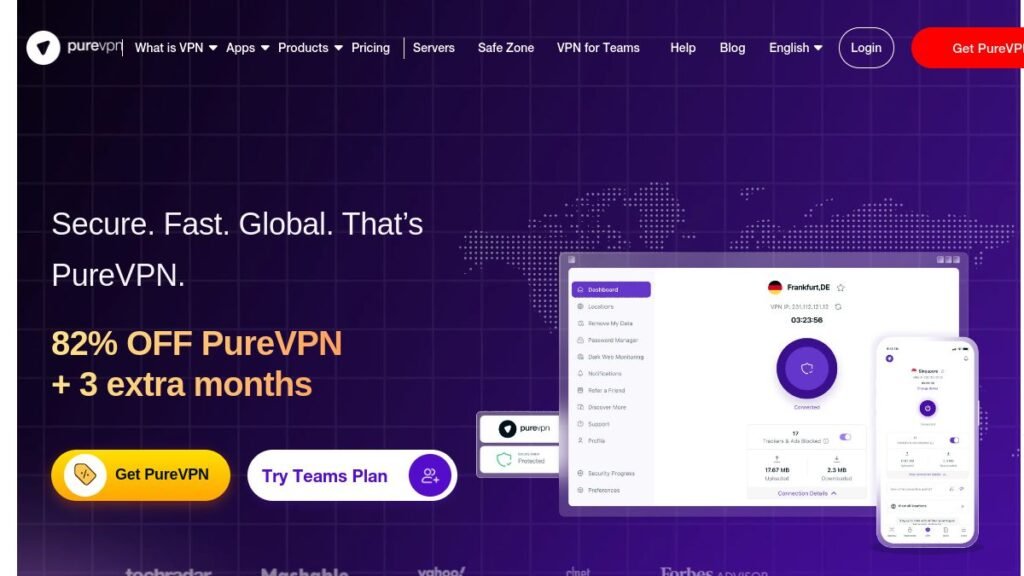
PureVPN offers apps and setup options across common computers, phones, browsers, TVs, consoles through router configuration and other connected devices. Its official 2026 pages list more than 6,000 servers across 65-plus countries, but network totals can change and should be rechecked on publication day.
Supported modern protocols include WireGuard, OpenVPN and IKEv2 on compatible platforms. PureVPN also sells optional features such as dedicated IP and port forwarding. These can help specific users, but they increase the effective price and should not be treated as included unless the selected plan clearly says so.
Ten simultaneous connections cover a typical home. Streaming and P2P-friendly locations are available, although results depend on the chosen server and the platform’s current detection systems.
Pricing: including every selected add-on.
Best for: users who need broad device support or a specific paid networking add-on.
Not ideal for: buyers who want one simple all-inclusive price.
Which VPN Is Fastest and Safest?
There is no permanently fastest and safest VPN for every reader. Speed depends on the original connection, server distance, congestion, protocol, device hardware and local routing. Safety depends on both the VPN’s architecture and how correctly its apps and policies are implemented.
For speed potential, start with NordVPN’s NordLynx, Surfshark’s WireGuard, ExpressVPN’s Lightway or another modern WireGuard-based option. Then test a nearby server at the same time of day against a no-VPN baseline. Run at least three trials and report the median, not the single best result.
For privacy, look beyond encryption labels. Check kill-switch behavior, DNS and IPv6 leaks, account data, audit scope, app source availability, ownership and how the provider responds to legal requests. Proton VPN and Mullvad are particularly privacy-focused choices, while NordVPN, Surfshark, ExpressVPN and PIA offer broader mainstream feature sets.
Which VPN Is Best for Streaming?
NordVPN is the strongest all-round starting point in this comparison, with Surfshark and ExpressVPN close alternatives. CyberGhost’s activity-based lists are useful for beginners, while Proton VPN includes streaming support on paid tiers.
Streaming availability is never permanent. A service that works today may be blocked tomorrow, and a VPN cannot give you rights to content outside your subscription. Check the streaming service’s terms, use only lawful access and test the exact platform, country library and device you plan to use.
For the best chance of smooth playback:
- Choose the nearest suitable server rather than the farthest possible location.
- Use WireGuard, NordLynx or Lightway when available.
- Install the native VPN app on the viewing device where possible.
- Try another server if an IP address is blocked.
- Contact support for current troubleshooting, but avoid any promise of guaranteed access.
Which VPN Apps and Devices Are Supported?
All ten providers offer apps for the major desktop and mobile systems. Differences become more important on Linux, Apple TV, Android TV, Fire TV, browsers and routers.
ExpressVPN is especially approachable for router use because of its dedicated router ecosystem. NordVPN, Surfshark, CyberGhost, PIA, Proton VPN, IPVanish, Mullvad, Windscribe and PureVPN also provide router instructions or compatibility, but the exact setup depends on router firmware.
A router connection can protect devices that do not run VPN apps, but the router may count as one connection while covering many local devices. It can also make location switching less convenient. Confirm compatibility before buying new hardware.
Which VPN Has the Best Customer Support?
NordVPN, Surfshark, ExpressVPN, CyberGhost, PIA, IPVanish and PureVPN provide live-chat or rapid online support options, while every provider in this comparison publishes setup or troubleshooting documentation. Support availability, language coverage and response times can change, so test the contact channel before relying on it during travel.
The best support team does more than send a scripted answer. It should identify your device and app version, explain how to change protocols, help interpret connection errors and clearly state billing or refund rules. Never give a support agent your VPN password, one-time authentication code, banking PIN or unrelated account credentials.
Privacy-focused services may intentionally keep support simpler. Mullvad, Proton VPN and Windscribe have extensive documentation, but the exact mix of live chat, email and ticket support depends on the plan and current service policy. Confirm the channel and hours you need before subscribing.
How Much Should a Good VPN Cost in 2026?
The lowest advertised monthly equivalent is rarely the amount charged each month. Many VPNs bill the full one-year, two-year or longer term upfront, then renew at a different rate.
Before buying, record these five figures:
- Total charged today.
- Length of the initial term.
- Effective monthly cost.
- Renewal date and renewal amount.
- Refund window and exclusions.
Also check taxes, currency conversion and paid extras. A cheap VPN is not good value if it lacks the locations, apps or privacy features you actually need. For many households, Surfshark, PIA, IPVanish or Windscribe can offer extra value because they support unlimited connections.
What Security and Privacy Features Matter Most?
A kill switch blocks internet traffic if the VPN tunnel drops. Test it during server changes, sleep and wake, Wi-Fi switching and app crashes because behavior can vary by operating system.
Leak protection should keep DNS, IPv6 and WebRTC requests from exposing information outside the tunnel. Run repeat tests after every major app update.
Modern protocols such as WireGuard and Lightway aim to provide efficient encrypted connections. OpenVPN remains a useful compatibility fallback. Avoid PPTP for privacy-sensitive use because its security is outdated.
Multi-hop routing sends traffic through more than one VPN server. It can add privacy in specific threat models, but it usually increases latency and is not necessary for normal browsing.
Obfuscation disguises VPN traffic so it is less obvious to a restrictive network. Availability and reliability vary. Check your local laws, as VPN legality varies by country and can change.
Independent audits can improve confidence, but read the date, scope and full report when available. An audit of one app version or one policy claim is not a permanent guarantee about the entire company.
Best VPN 2026 Pros and Cons
Pros
- Strong VPNs encrypt traffic between your device and the VPN server.
- They reduce exposure on untrusted public Wi-Fi.
- They can hide your home IP address from websites and peers.
- Modern apps make server and protocol selection simple.
- Many plans protect several devices under one subscription.
Cons
- A VPN can reduce speed or increase latency.
- The provider becomes a trusted intermediary, so its policies matter.
- Streaming sites and other services may block VPN IP addresses.
- Introductory prices can renew at a higher rate.
- A VPN does not stop phishing, malware, unsafe downloads or account compromise by itself.
Verdict: Who Is Each Top VPN Provider Best For?
Choose NordVPN if you want the best overall balance of privacy, speed potential, streaming support and ease of use. Choose Surfshark for unlimited devices and strong long-term value, or ExpressVPN for the most straightforward beginner experience.
Pick Proton VPN or Mullvad when privacy design matters more than entertainment extras. CyberGhost suits streaming-focused beginners, PIA suits technical and P2P users, and IPVanish suits busy multi-device homes. Windscribe is a flexible free starting point, while PureVPN covers broad platforms and optional specialist features.
There is no universal winner for every network. Use the refund window to test your own devices, local servers and required streaming services before making a long commitment.
Frequently Asked Questions
NordVPN is our best overall VPN in 2026 because it balances modern security features, broad device support, server choice and streaming capability. Surfshark is better for unlimited devices and value, while Proton VPN and Mullvad suit privacy-first users. Test the final choice on your own network because performance varies by location.
ExpressVPN is one of the easiest VPN services for beginners because its apps emphasize a simple connect-and-choose-location workflow. NordVPN and CyberGhost are also approachable. Beginners should keep automatic protocol selection enabled, turn on the kill switch and use a nearby server unless they specifically need another location.
No VPN is always fastest for every user. NordLynx, WireGuard and Lightway are strong modern protocol options, but actual results depend on distance, congestion, device and internet provider. Compare three or more tests on the same server at similar times and report the median result instead of relying on marketing claims.
A free VPN can be reasonable when it comes from a reputable provider with clear funding and privacy practices. Proton VPN and Windscribe offer limited free access alongside paid plans. Avoid unknown services that lack transparent ownership, policies or security documentation, and never assume a free app protects every type of online activity.
No. A VPN hides your home IP from destination sites and encrypts traffic between your device and its VPN server, but accounts, cookies, browser fingerprinting, payments and login behavior can still identify you. Strong privacy also requires safe browser settings, updated devices, careful account use and realistic expectations about your threat model.
VPN rules differ by location and can change. Many people use VPNs for privacy, remote work and safer public Wi-Fi, but some countries restrict or regulate them. Check your local laws and the terms of any website or streaming service you use. A VPN does not make unlawful activity lawful.
Final Recommendation
For most readers, start with NordVPN and compare its live price with Surfshark and ExpressVPN. Privacy-first users should also examine Proton VPN and Mullvad. Whichever service you choose, test the kill switch, leak protection, nearby-server speed, streaming device and renewal terms during the refund period.